

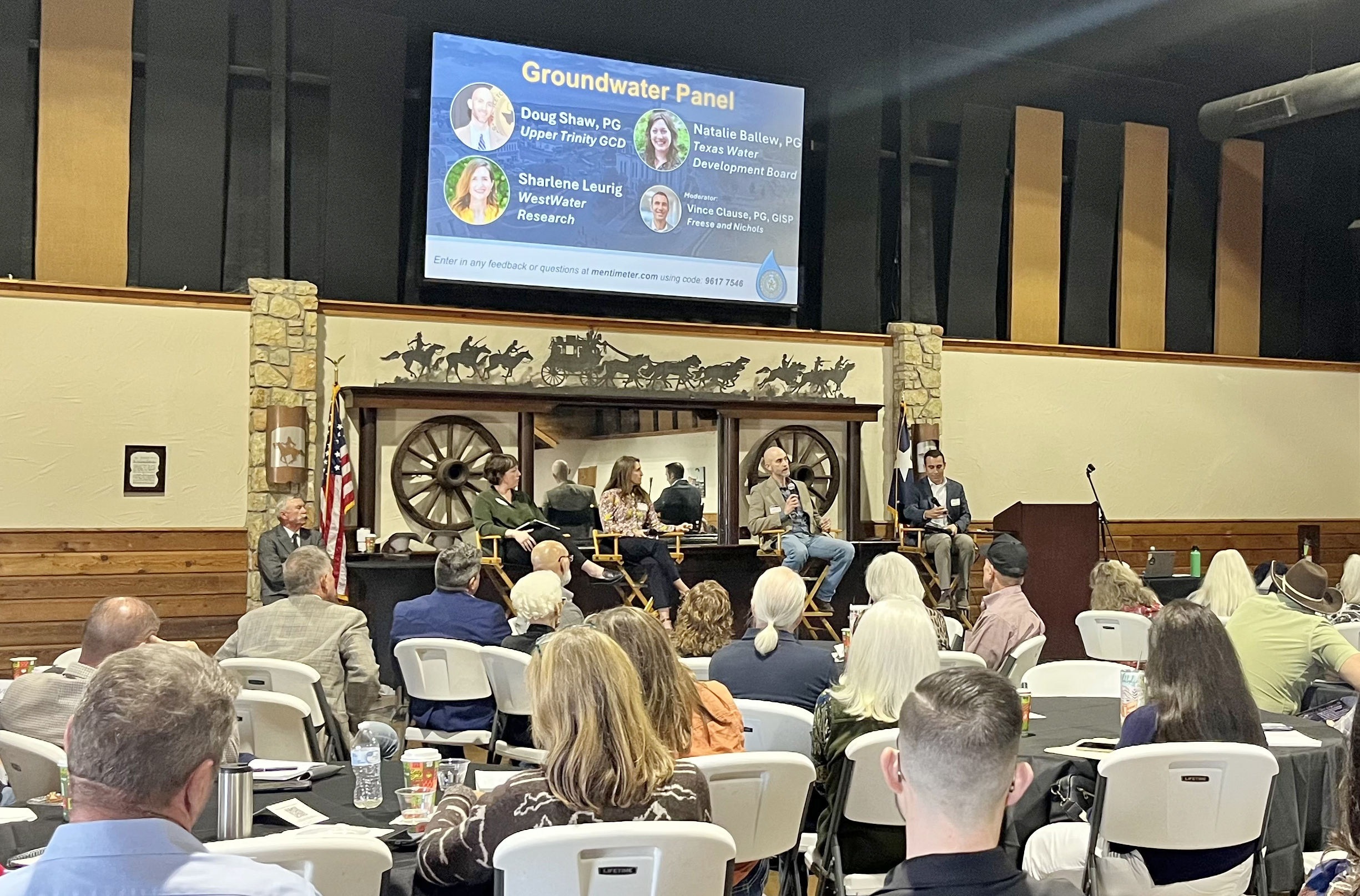
On November 21, WestWater Research’s Texas Regional Director, Sharlene Leurig, spent the day at the Parker County Sheriff’s Posse rodeo grounds. It was water, not cattle, on the agenda. The water symposium, convened as an open meeting of the County Commissioners Court, attracted several hundred residents to hear what the future holds for water supplies in one of the fastest growing counties in the country.
The forecast for Parker County’s water supplies offers a glimpse of the extraordinary supply-demand imbalances that many rapidly populating regions of Texas now face. Over the past hundred years, an estimated 17,000 groundwater wells have been drilled in Parker County. That’s more wells per square mile than any other county in the state. Some hydrogeologists on hand estimated it may be more wells per square mile than anywhere else on earth.
Domestic groundwater use in Parker County is exempt from regulation, and as groundwater pumping has proliferated over the last century, so has the steady decline of aquifer storage. More than once, speakers at the water symposium described what was happening in Parker County as “a race to the bottom of the aquifer.” As subdivisions advance westward from Tarrant County, home to the City of Fort Worth, Parker County recognizes growth can no longer be fueled by private groundwater wells. The question becomes how new water supplies can be developed and whether existing residents—most of whom have no pipes connecting them to water or wastewater services—will be able to tap into new supplies once they are brought online.
Sharlene joined representatives of Parker County Groundwater Conservation District, the Texas Water Development Board and Freese and Nichols on a panel to discuss the tools available for Parker County to diversify its water portfolio. Development of regional projects, whole-home water harvesting systems, and subdivision-scale non-potable reuse systems are all on the table.
WestWater serves municipal clients across the West who are planning for imminent supply shortages. Whether it is vetting portfolio options, designing water rates and impact fees or evaluating the economics of conservation and reuse, we help our clients balance the dual necessities of supply reliability and economic feasibility.