
WestWater Research was proud to sponsor and participate in Transforming Water, West, presented by the ASU Water Institute, Columbia University, and Sciens Water on March 20, 2026 in Tempe, Arizona. The following reflects key themes from the event.
The knowledge to solve America’s water crisis largely exists. The technologies are advancing. The investment interest is growing. What’s missing is coordination across sectors, timelines, and incentive structures that rarely point in the same direction.
That was the central theme at Transforming Water, West, a conference that brought together leaders from finance, industry, academia, and government to grapple with the water challenges facing the American West. The conversations were candid, and the takeaways were instructive for anyone tracking where water policy and investment are headed.
The infrastructure gap is real and getting harder to ignore
Aging infrastructure is the number one price driver in the U.S. water sector today. Alongside it, chronic underinvestment in both capital and workforce development represents the sector’s greatest long-term risk. Water received the lowest share of Jobs Act funding of any major infrastructure category, a reflection of how broadly its economic importance is still misunderstood.
The hard truth discussed throughout the conference: water is systematically undervalued and underpriced. Utilities that struggle often do so not because of mismanagement, but because rates are structurally insufficient to fund maintenance and reinvestment. That won’t fix itself without deliberate policy and rate reform.
Private capital is entering the space, but carefully
Venture capital and institutional investors are increasingly looking at water, drawn by converging demand pressures: data center growth, agricultural needs, and municipal stress arriving simultaneously. Arizona alone has 162 data centers operating today, each a significant water consumer and, increasingly, a testing ground for next-generation water technology.
Investors on the panel were frank about the challenges. The gap between proof-of-concept and commercial scale continues to kill promising projects. Roughly ten pilots fail for every one that succeeds, a reality that both public partners and private investors need to build into their planning. Emerging models like Water as a Service, which shifts operational risk away from municipalities while enabling integrated treatment and distribution, offer one path forward.
Water markets and pricing transparency matter more than ever
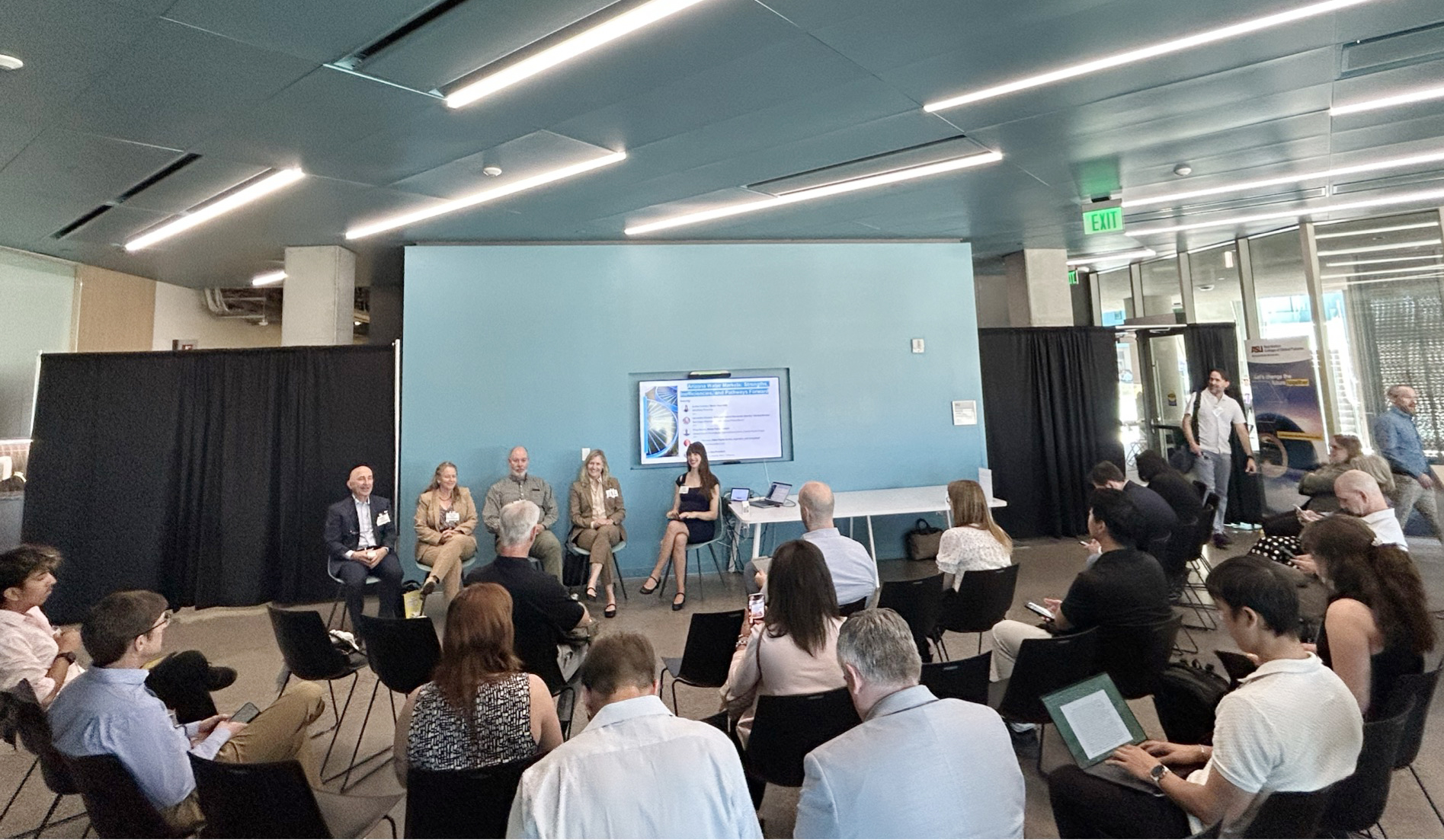
WestWater’s Audrey Goddard, Senior Associate, joined a panel examining Arizona water markets, one of the most active in the West, where the breadth of entitlements supplying the state’s communities and industries came into sharp focus. Cities, farmers, developers, Tribes, and utilities actively trade everything from Colorado River allocations to groundwater to long-term storage credits, navigating both the opportunities and the uncertainties that come with post-2026 Colorado River negotiations.
Well-structured water markets work. Long-Term Storage Credits are one example of what clearly defined, well-regulated water rights can enable. But persistent friction points remain: pricing transparency, market liquidity, and the physical constraints of moving water. The broader lesson is that communities need to understand the true economic and social cost of water before they can make good decisions about how to allocate it.
The Great Salt Lake is a warning and an opportunity
The Great Salt Lake generates an estimated $1.5 billion per year in economic value, supporting food production, mineral extraction, recreation, and critical habitat. It continues to shrink. The math of saving it is achievable, as a 10% reduction in overall water use could make a meaningful difference, but it requires the kind of flexible policy tools that Utah has only recently begun to develop, including water leasing programs that pay farmers to reduce consumption on marginal lands.
The lake is also a reminder that conservation and farming culture are not inherently at odds. Programs designed around the generational commitment irrigators have to their land tend to produce more durable outcomes than those that treat agricultural water use as simply a number to cut
The design principle that matters most
Across every session, one theme recurred: flexibility. Flexibility in water law, in financing structures, in how we define supply. The West’s water future will not be secured by any single technology or policy. It will be built through partnerships that bridge short- and long-term horizons, public and private incentives, and under-resourced communities and capital seeking returns.
That bridging work is already underway. Transforming Water, West made clear there is no shortage of willingness. What’s needed now is follow-through.