

California’s water supply is getting less reliable. Surface water supplies from Northern California and Colorado River deliveries are under pressure, and groundwater regulations are starting to bite.
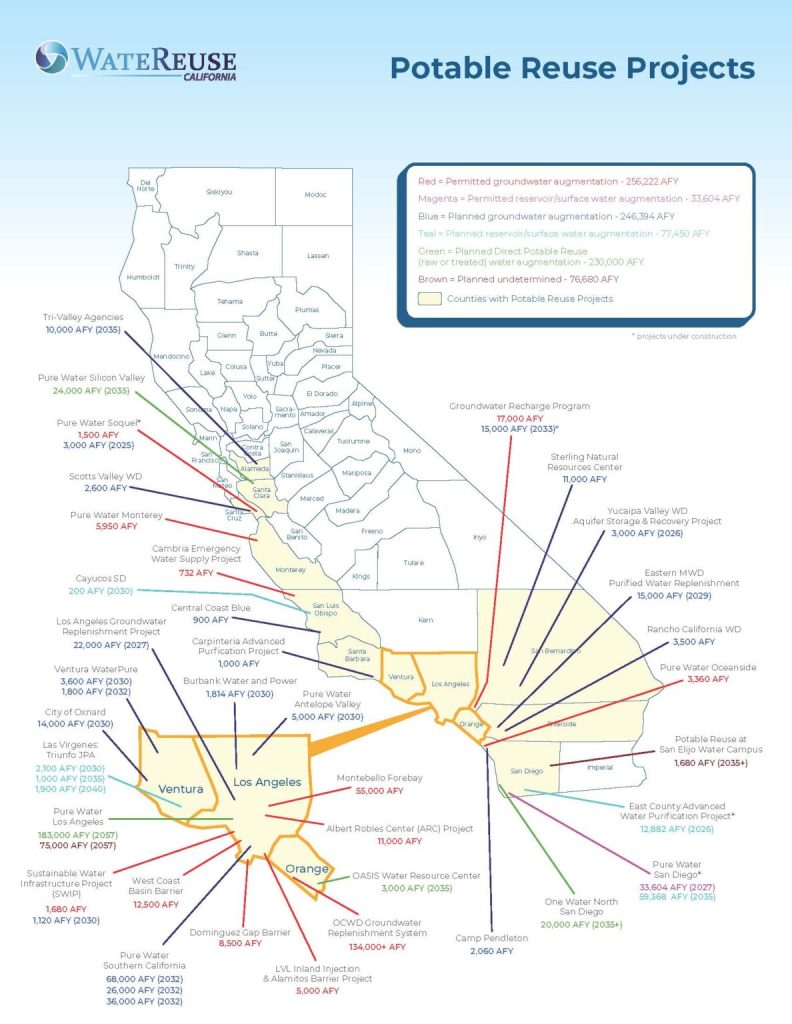
Growing demand for water reuse projects is a credible response to these pressures. WateReuse California’s potable reuse map shows the scale of what is coming: projects in planning, design, and construction across the state representing on the order of 920,000 acre-feet of permitted and planned new supply. If those projects get built, they will meaningfully offset declines in the availability of other water supplies.
But that is a large “if – at last week’s WateReuse California Annual Conference in San Francisco, the technology question felt largely settled. Direct and indirect potable reuse are mature. The binding constraints now are cost, public perception, and the coordination required when a project spans multiple water and wastewater agencies. The agenda reflected two of those three. Session after session addressed interagency coordination, customer communications, and safety messaging. That work matters. Public trust is the precondition for everything else.
What seemed to be lacking was a matching focus on the economics and finance of these projects. By my count, there was one session explicitly focused on the economic impacts of developing a reuse project.
That is a gap. These are capital-intensive assets carrying real financial risk:
- Cost relative to alternatives. How does purified water compare against imported supply, transfers, banking, or conservation over the life of the asset?
- Financing and rate impacts. Grants cover part of the capital stack. Ratepayers cover the rest. What does the bill look like in year five?
- Ownership and cost allocation. Multi-agency projects need a defensible basis for splitting costs and benefits before construction, not after.
- System-wide effects. If reuse projects collectively reduce demand for imported water, what happens to imported water rates for everyone still buying it?
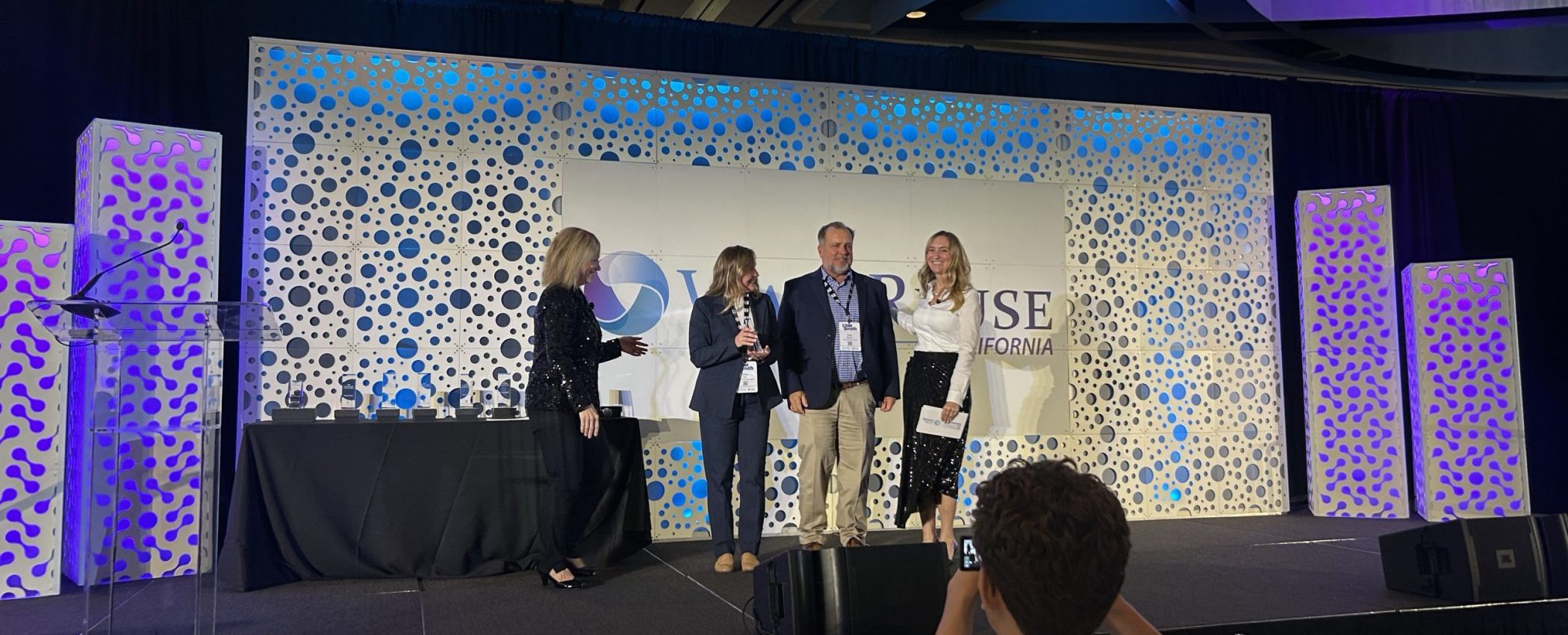
These questions get harder, not easier, as projects move from planning into implementation. Boards, ratepayers, and regulators will ask them. Projects with answers ready will move faster. This is work WestWater does. Last year we supported a Central Coast client evaluating the economics of a water reuse project. We built an economic model comparing the cost and reliability of an indirect potable reuse program against the alternative of acquiring and banking supply, locally or in the Central Valley. The analysis gave the utility a defensible basis to proceed and the reuse project broke ground in May 2026 and the utility was recognized at this year’s WateReuse California conference as the Recycled Water Agency of the Year.
The safety and communications work is necessary but not sufficient. A project also has to pencil, and it has to be shown to pencil against the alternatives. The reuse sector has spent a decade proving the water is safe. The next decade will be spent proving it is worth the cost.

Oliver Browne
Senior Director of Economic Research