

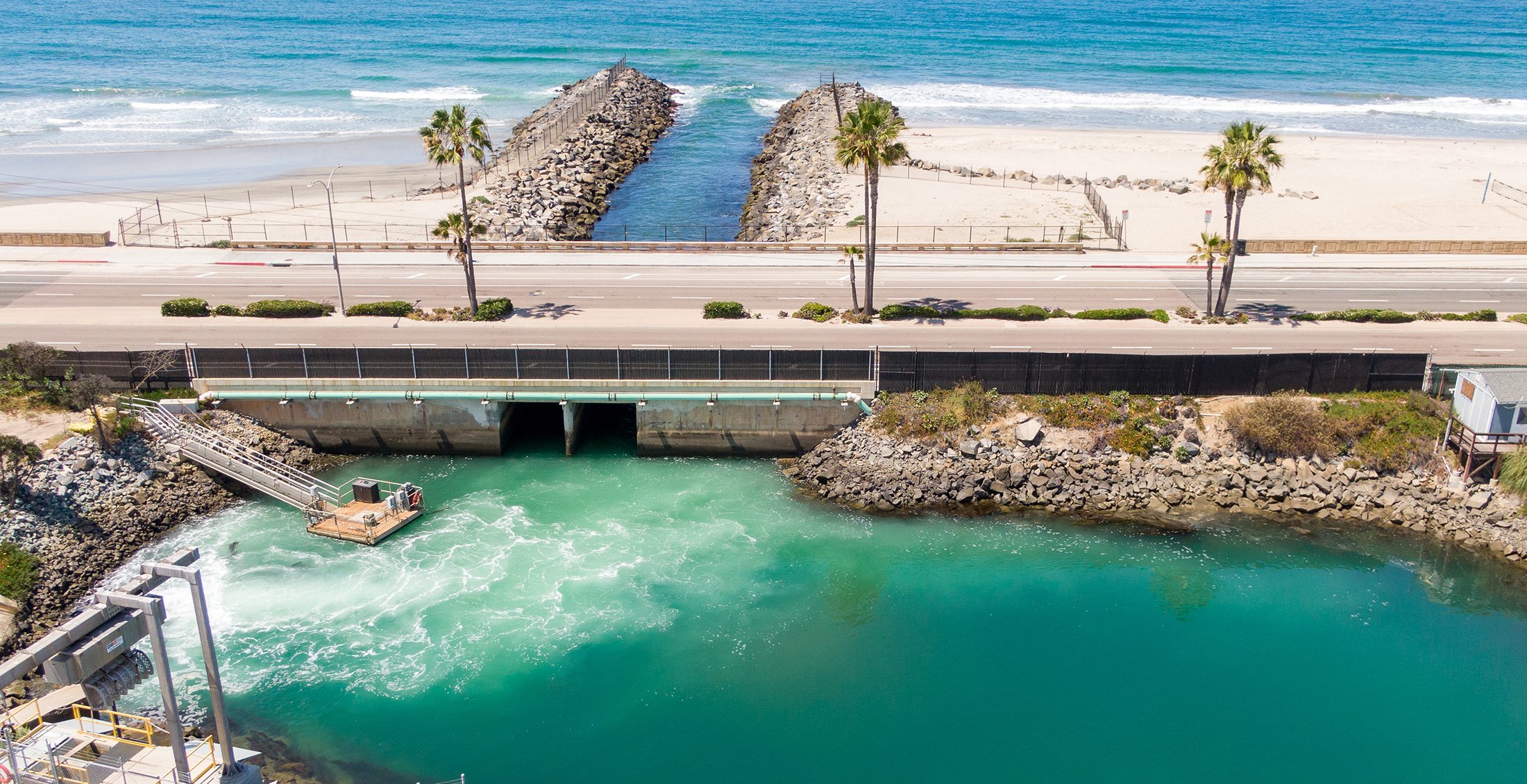
In early September, the Corpus Christi city council voted again to not proceed with a 30 MGD desalination project on Hillcrest Bay that is fully permitted and 60% designed. Council reasons focused on cost, location, and environmental impact of the facility discharge. This decision comes on the heals of a potential “day zero” when city water demand would exceed available supply.
Rain storms provided some relief but the city still needs to address long-term water supply needs. In 2022, the California Coastal Commission rejected the 100 MGD Huntington Beach desal plant which had been planned for 20 years, citing high costs, uncertain demand, and environmental impacts of the plant discharge.
These projects point to the most common hurdles to developing desal: (1) capital and operating costs are typically higher than traditional freshwater sources at roughly $2,000 to $3,000 per acre-foot of produced water, and (2) disposal of the concentrated brine effluent is problematic due to environmental impacts in the ocean. Emerging technologies, such as distributed treatment wells on the ocean floor, are aiming to address both of these challenges and are currently being piloted.
It’s a striking contrast to the rest of the world: Gulf states like Saudi Arabia and the UAE now cover 50-90% of municipal supply with desalinated water, and Israel gets roughly 70-80% of its drinking water the same way, while the US, despite similar coastal access and far greater fiscal capacity, can’t seem to get large plants past permitting and local opposition.
Historically, water utilities in the U.S. have not had to deal with the challenges presented by desal plants, because freshwater sources were available. As these current sources are stressed, desal remains a promising technology for future water supply development, but likely as a strategy of last resort.
WestWater has spent the last 20 years helping communities evaluate water supply options, and the financial impacts of water supply development choices. Buying water rights, securing option contracts, developing new supplies and storage, and exploring ways to find efficiencies in existing supply portfolios are often evaluated to make a strategic decision on how to ensure a reliable water system for utility customers. Desal may be a feasible solution in some communities – and a robust supply analysis gives communities the confidence to pursue projects.

“The Water Current” is a monthly news digest that provides brief summaries of interesting and timely news stories related to water economics and water markets in the Western United States. Our team tracks new developments in water policy, management, and conflicts, sharing articles relevant to their work and services.