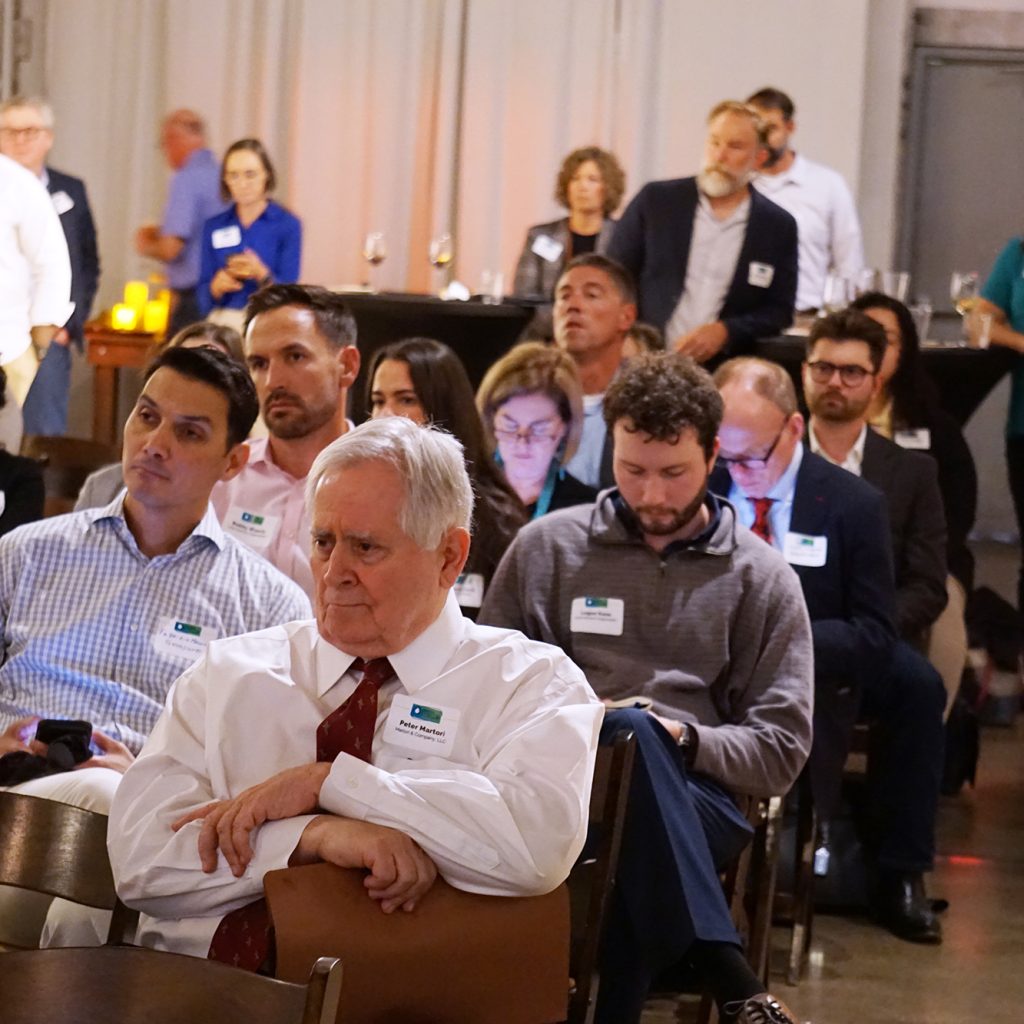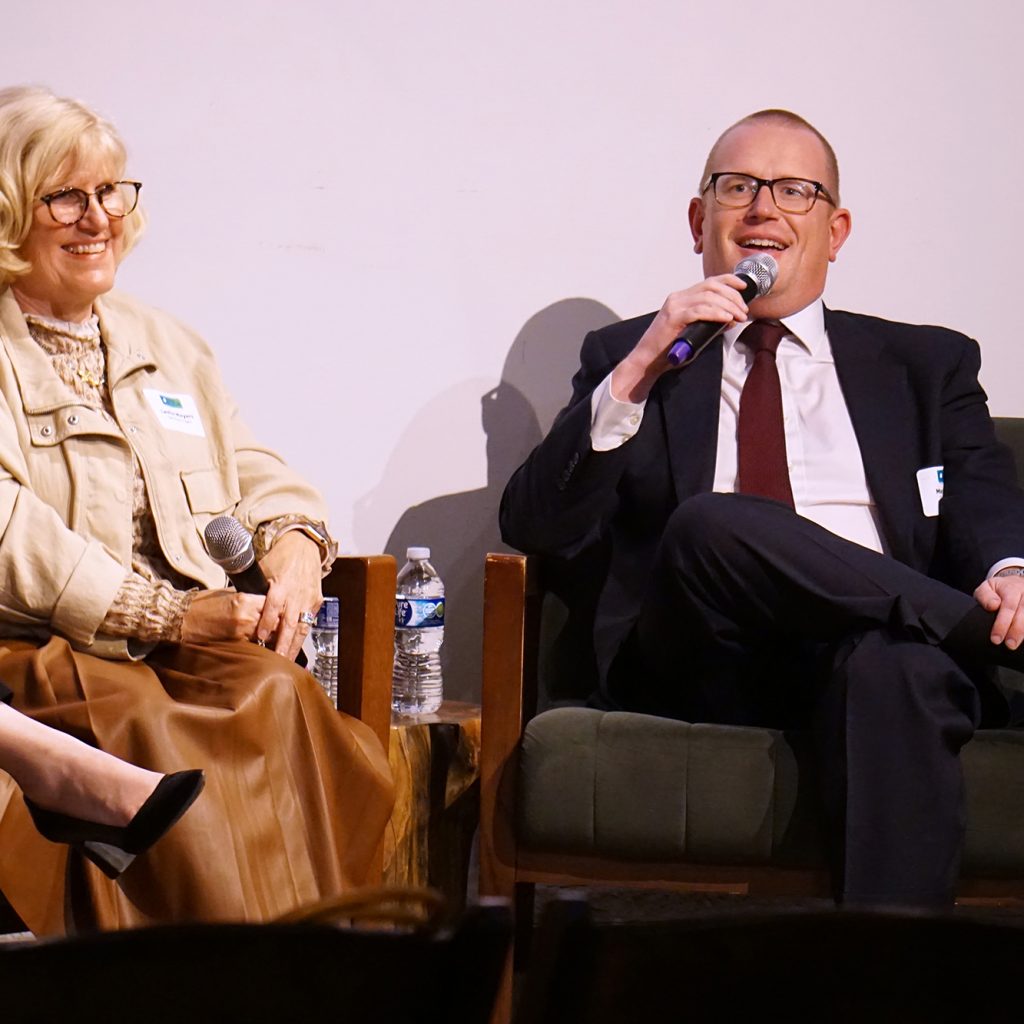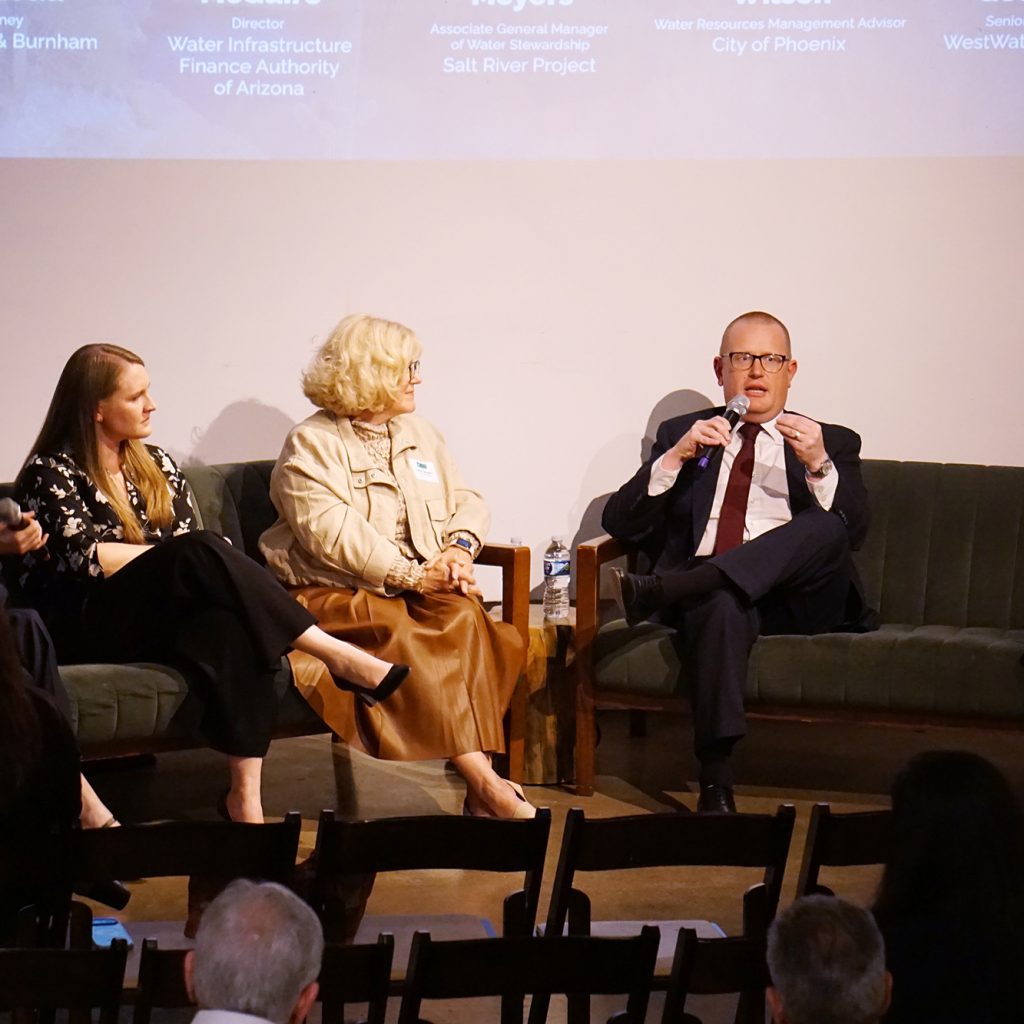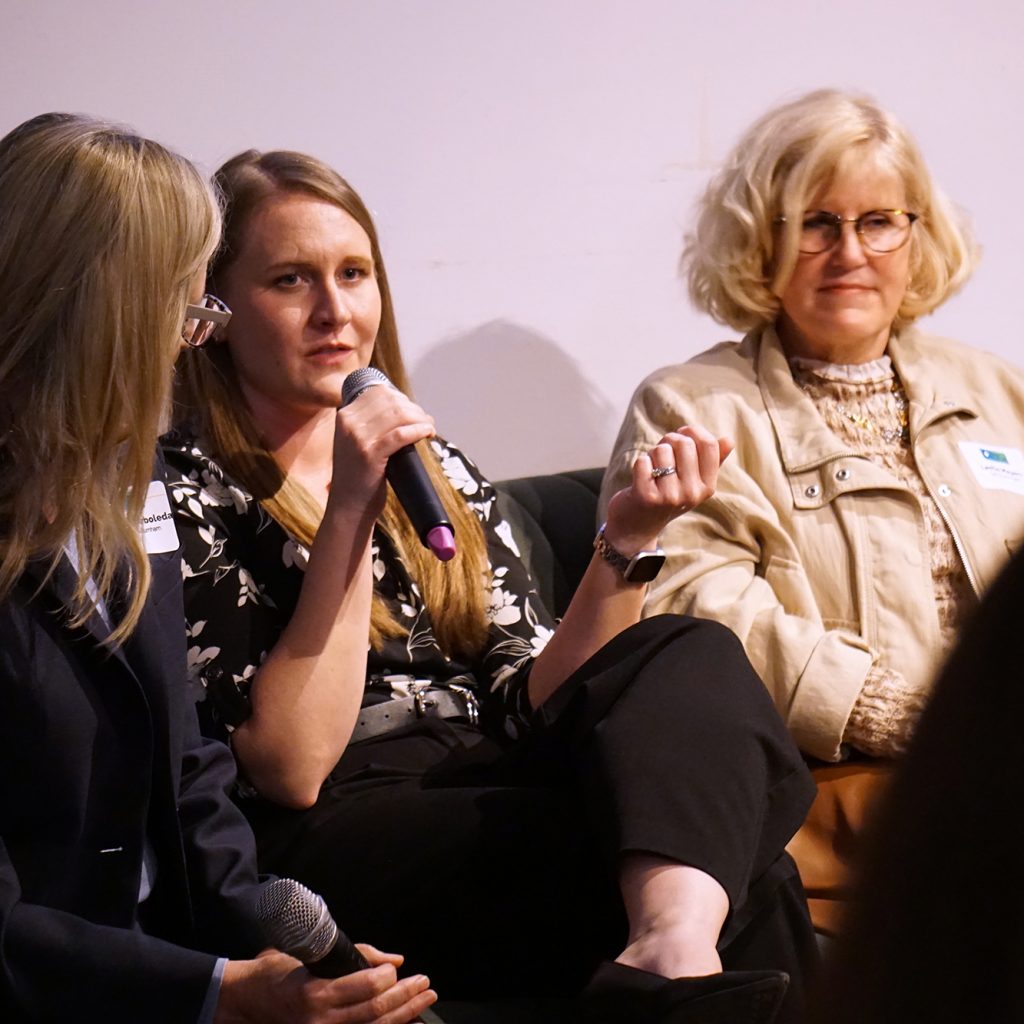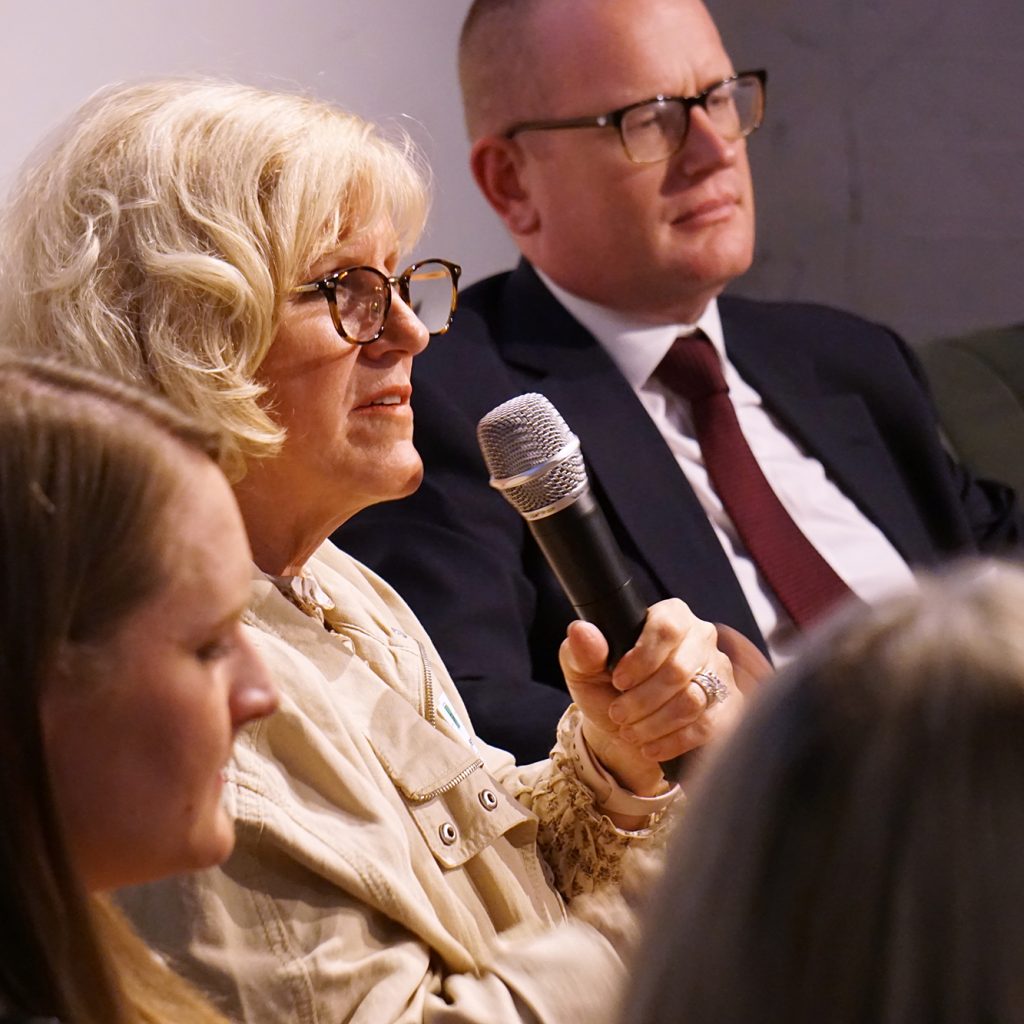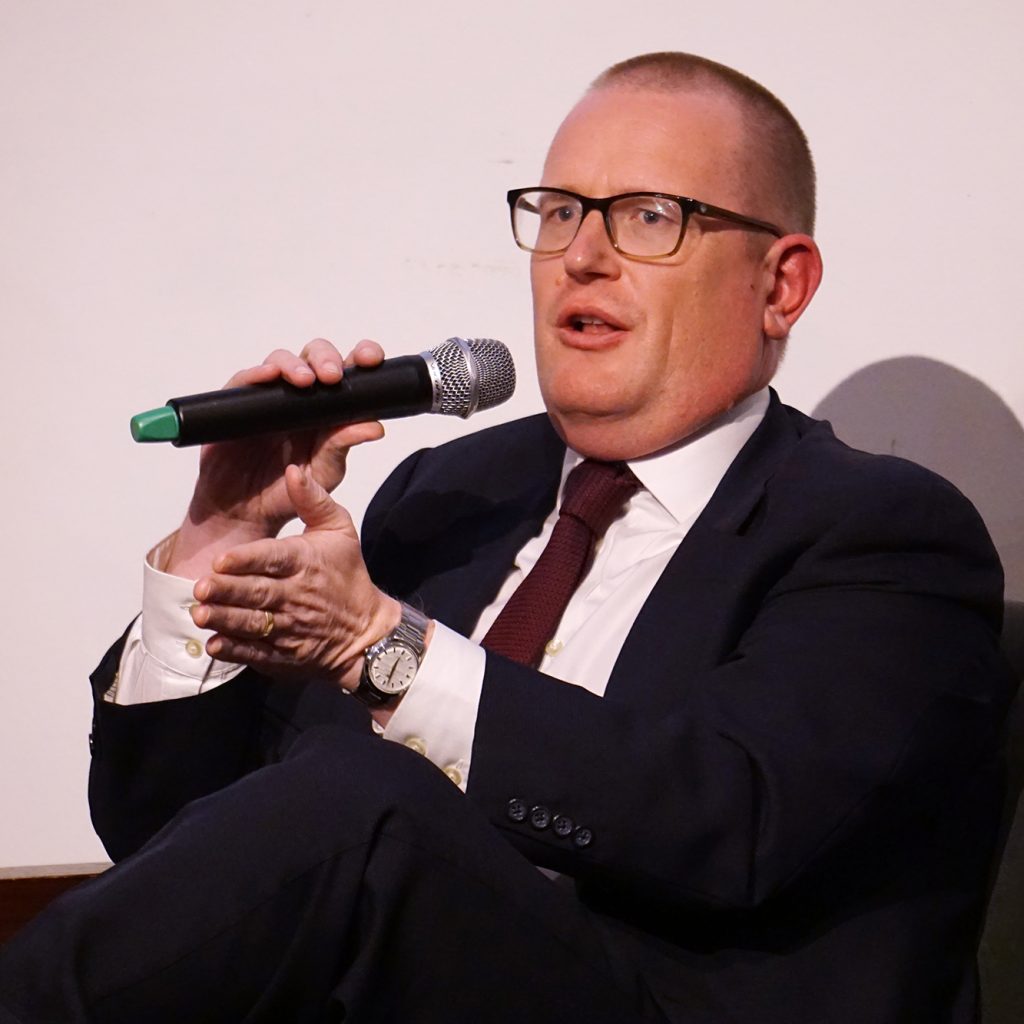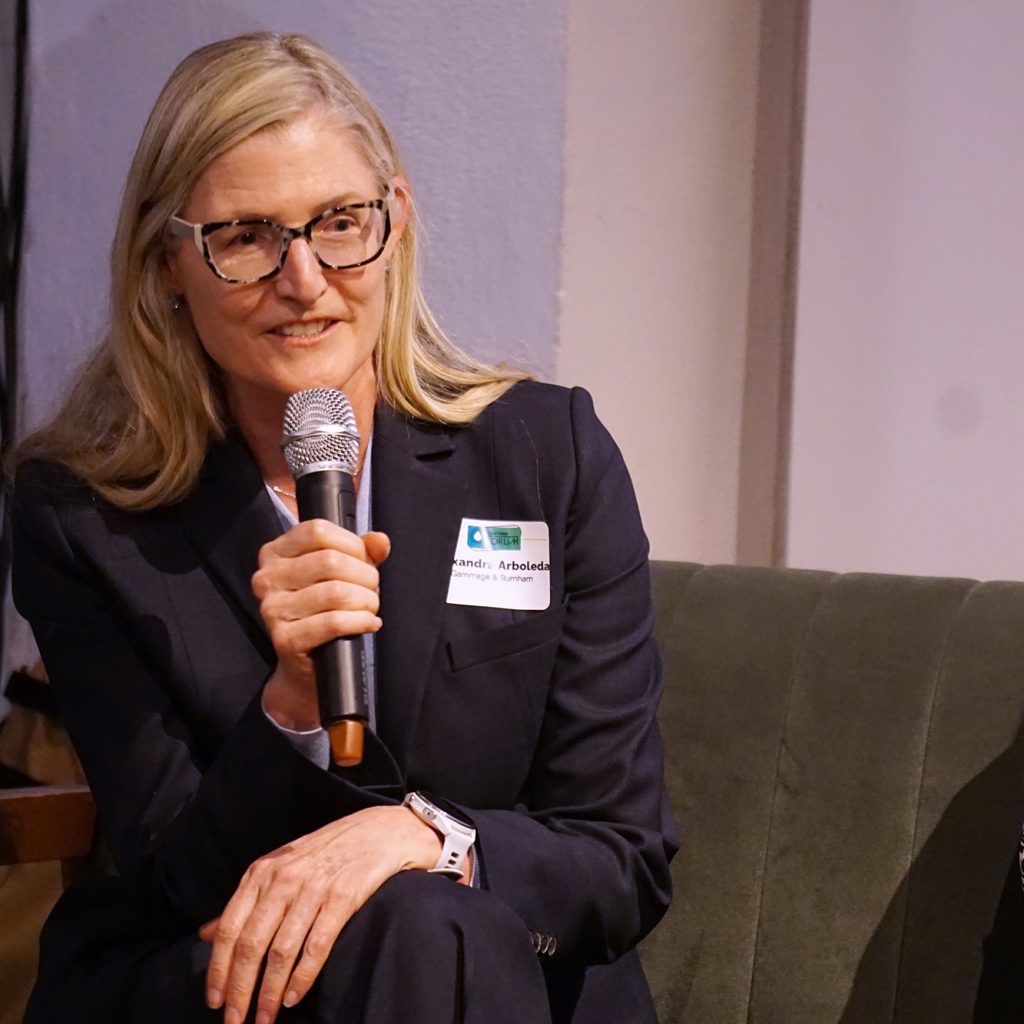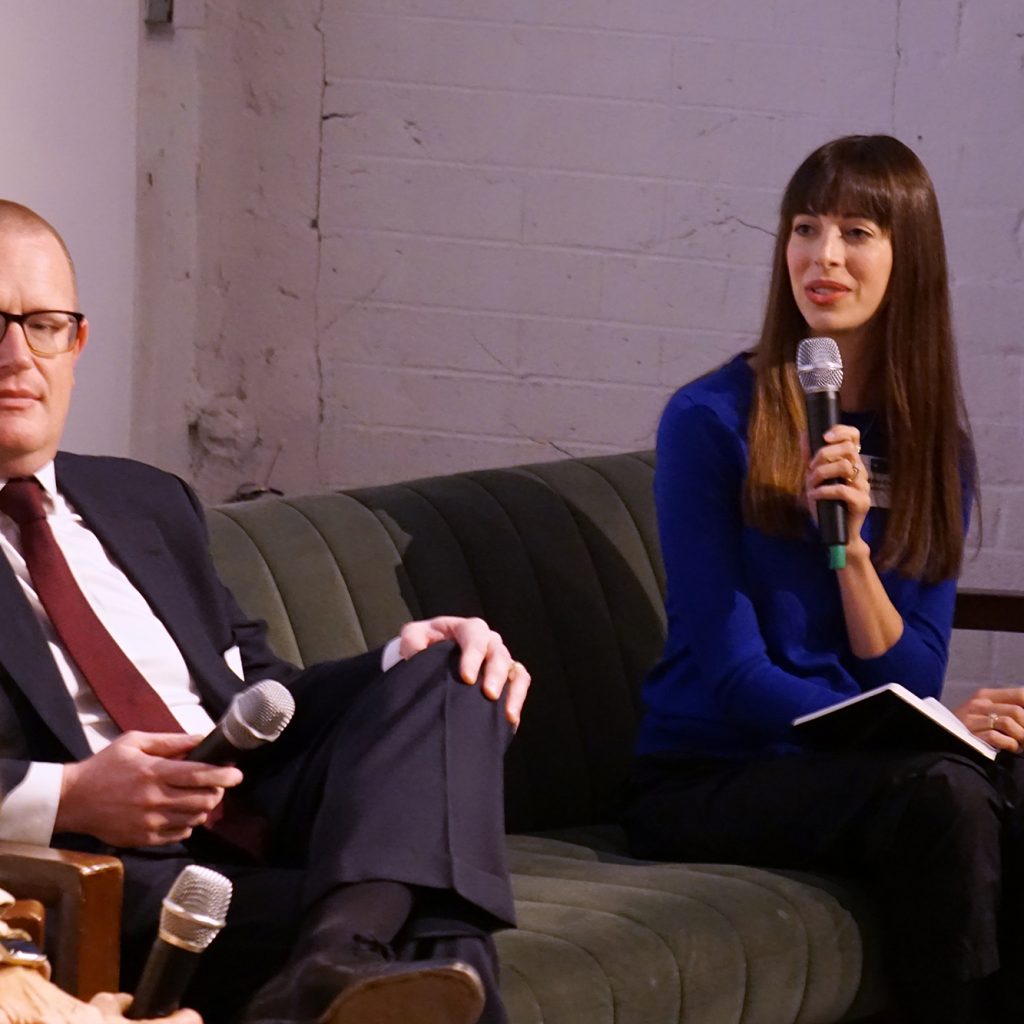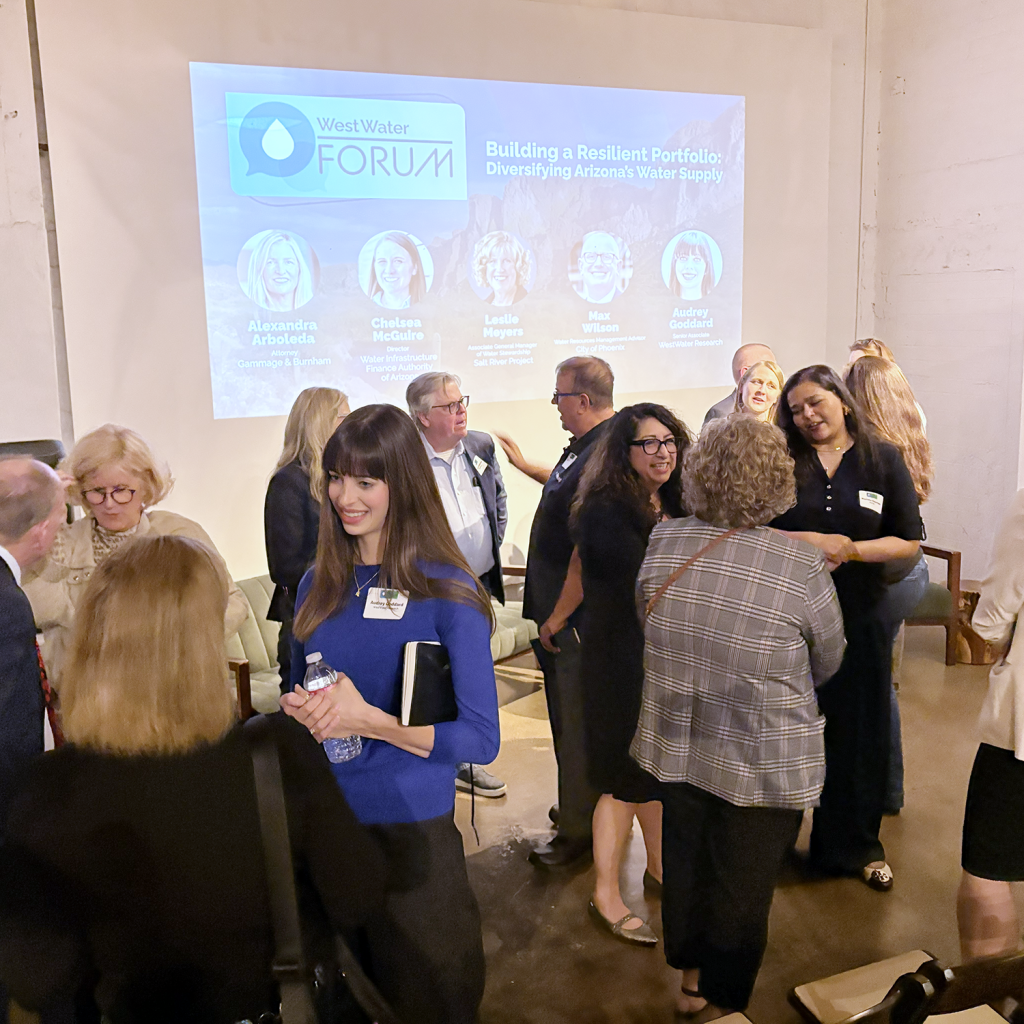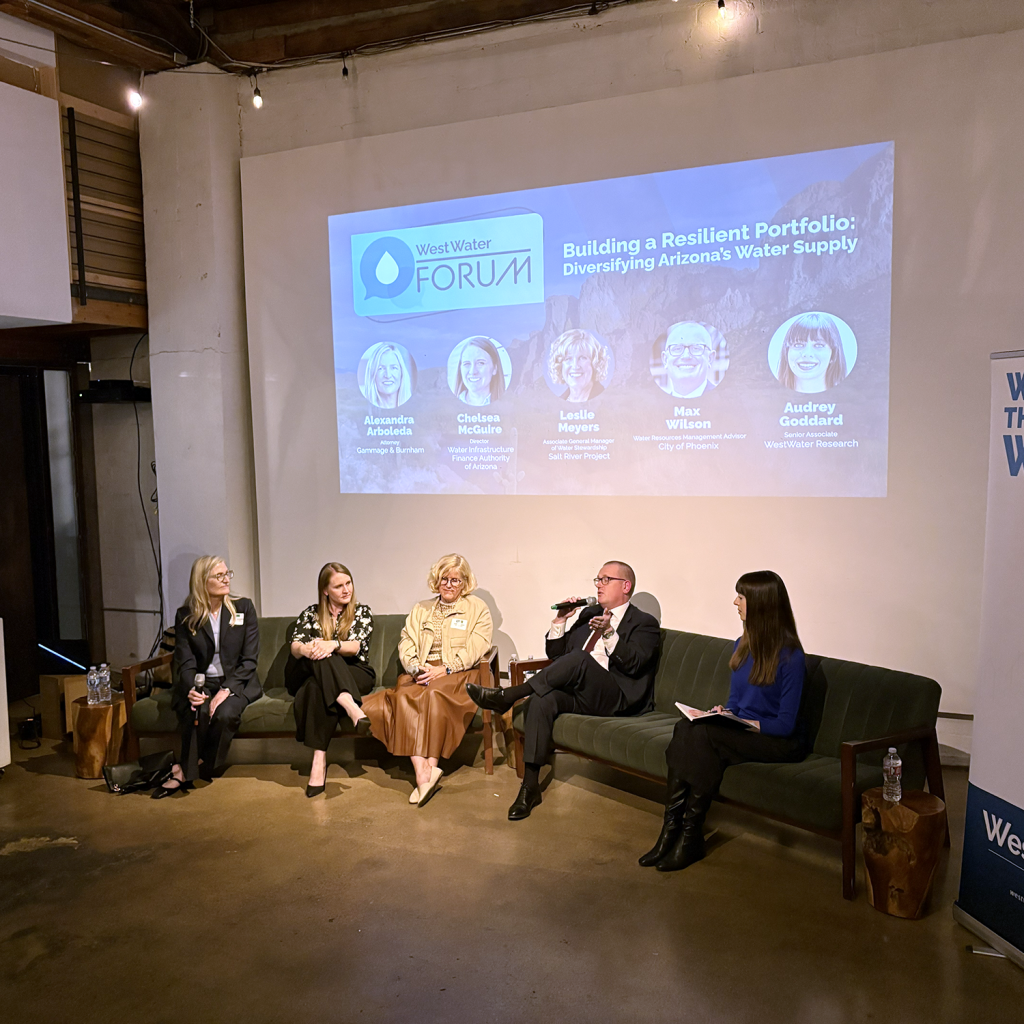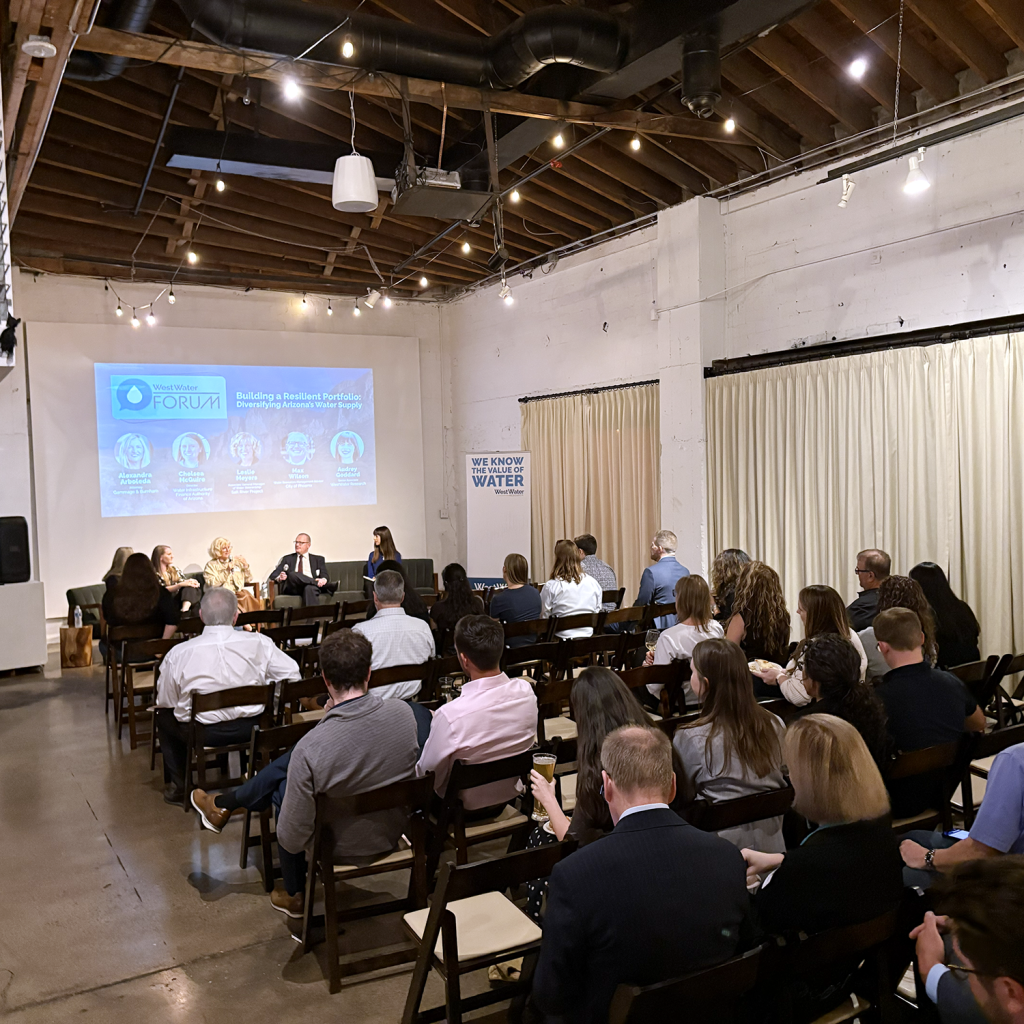
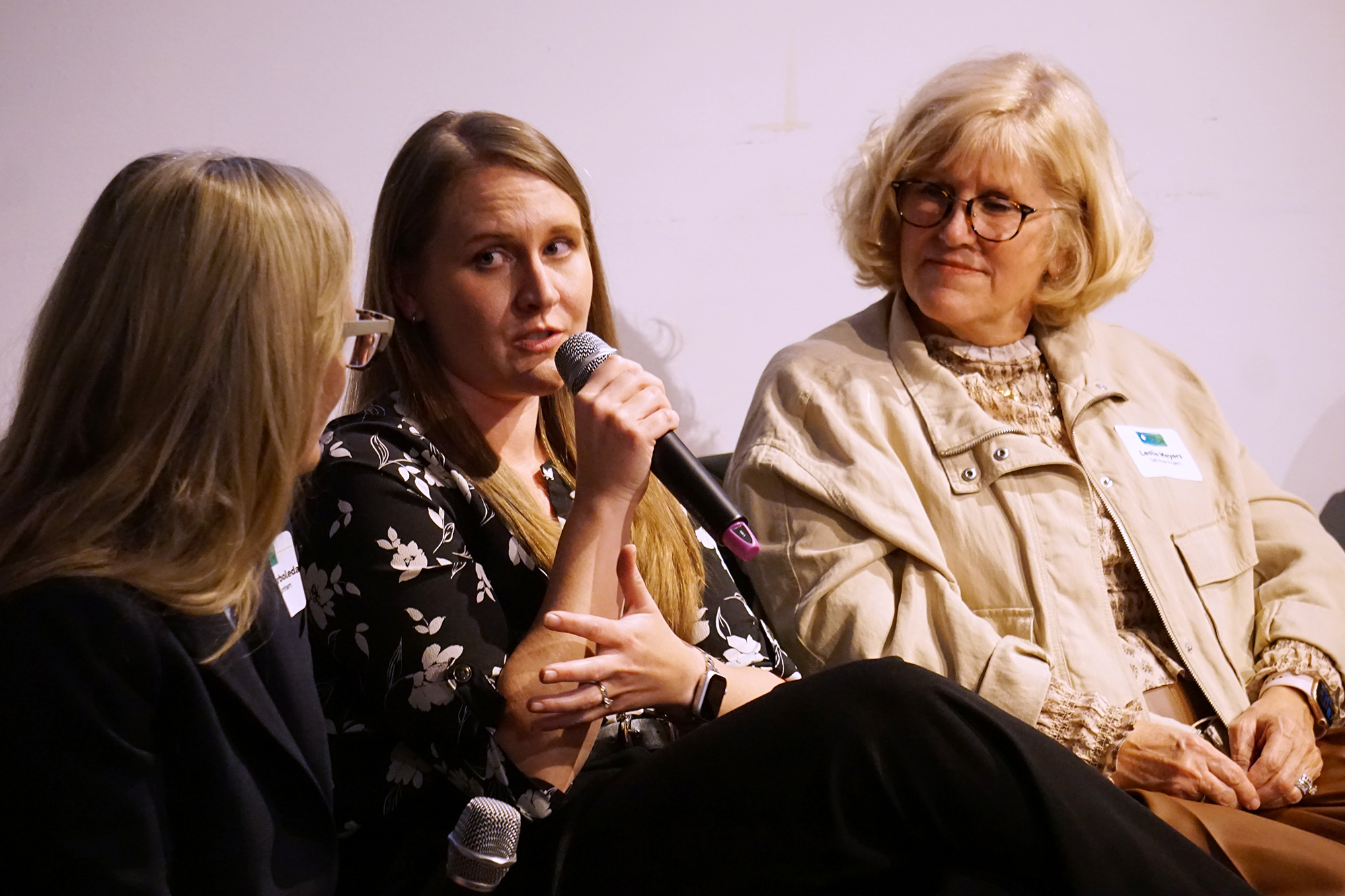
Last week, WestWater hosted a Forum at MonOrchid in Phoenix to discuss how Arizona can build a more resilient water portfolio through diversification, augmentation, and maximizing existing supplies, as well as the legal and technical challenges associated with new supplies. Panelists included Alexandra Arboleda of Gammage & Burnham and the Central Arizona Water Conservation District Board, Chelsea McGuire, Director of the Water Infrastructure Finance Authority of Arizona, Leslie Meyers of Salt River Project, and Max Wilson of the City of Phoenix, with discussion moderated by WestWater’s Audrey Goddard.
The conversations covered supply development, making the most of existing supplies, developing new sources, and building the legal and financial partnerships needed to move water across the state. Across all topics, it was understood that the era of easy and low cost water solutions is over and the next generation of water supply will require more storage, more capital, and more collaboration.
Legal Considerations for Moving Water
The conversation opened with the legal framework that shapes any new supply agreement. Panelists noted that it is not so simple to move water from state to state or country to country. Interstate and international transfers run through layers of compacts, federal law, and treaty obligations, so projects that bring in water from outside Arizona will likely require an exchange mechanism. Rather than physically conveying new water across borders, a partner could take delivery locally while Arizona takes a corresponding share of an existing supply, such as Colorado River water delivered through the Central Arizona Project (CAP).
Making the Most of Existing Supplies
SRP is always working to optimize the Salt and Verde River systems, and the proposed Bartlett Dam Modification on the Verde River was highlighted as a source of new water for the state. The Valley has seen a number of high-flow years, and most of the system’s releases come from the smaller dams on the Verde. Those reservoirs cannot hold large runoff events, so water that could be stored passes through the system.
In the 1990s, SRP raised Theodore Roosevelt Dam on the Salt River and added significant storage capacity. The Bartlett effort follows that model. SRP and 23 partners, including Valley cities, tribal communities, and agricultural entities, are participating with the U.S. Bureau of Reclamation in a feasibility study of raising the dam. As wet and dry periods grow more variable, the region must have the storage capacity to capture water when it comes.
Advanced Water Purification
The City of Phoenix’s Advanced Water Purification (AWP) program was discussed as a leading example of new local supply. AWP produces high-quality water, in many respects better than the surface water the city treats today, and Phoenix is moving as fast as legally possible to bring the program online.
The program is phased across three facilities, one is done, one is in permitting and one in design. Panelists expect the full program to be online by approximately 2035 and estimated significant cost, an investment of roughly $10 billion in less than ten years.
Policy and Partnerships at Scale
Panelists agreed that conditions for partnerships have never been better, in Arizona or anywhere else. Arizona has completed large water projects before, and its agencies, utilities, and private partners need to come together to do it again. The days of easy, low-cost solutions are gone.
The panel pointed to a potential exchange involving the Carlsbad desalination plant in San Diego County as an example. In June 2026, the Arizona Department of Water Resources (ADWR), CAP, and SRP signed a memorandum of understanding with the San Diego County Water Authority and other Colorado River agencies to explore exchanging desalinated water for Colorado River water. Panelists acknowledged that securing water from outside the state is difficult and will take significant capital and patience. Still, a successful exchange would set an important precedent, provided the parties can work through the institutional hurdles.
Panelists also stressed the role of policymakers. Decision makers need political cover to support projects that produce more expensive water, because the alternative is no new water at all. The Ag-to-Urban program, signed into law in June 2025 as SB 1611, was cited as a model of political consensus. The program lets developers in the Phoenix and Pinal areas retire irrigated farmland and convert its groundwater rights to lower-water-use development.
Looking Ahead
The discussion made clear that no single project will secure Arizona’s water future. Expanded storage, purified water, and interstate exchanges each fill a different role in a diversified portfolio. By investing in infrastructure, building durable partnerships, and giving policymakers the support to approve necessary higher-cost supplies by reframing the understanding of the value of water, Arizona can position itself to meet long-term demand with a more resilient water portfolio.