

TAGD 2026 Conference Summary
Earlier this month, WestWater Research joined groundwater districts, legislators, engineers, utilities, non-profits, and state agencies at the Texas Alliance of Groundwater Districts (TAGD) conference in San Antionio.
The 3-day event covered a huge range of topics relevant to groundwater in Texas. From land conservation, aquifer storage, and availability modeling to geochemistry, AI, and long-term planning the conference discussed every major issue relevant to Texas groundwater today. The event took place against the backdrop of the upcoming State Legislative Session, which is expected to discuss major topics related to groundwater. Here are the key themes that the WestWater team took away:
- Transparency as a Tool: With Texas the focus of billions of dollars in investment and a growing number of regions approaching regulatory limits to production, GCDs face increasing challenges in balancing production with conservation of the resource. Transparency around rules to mitigate drawdown and manage drought will be key to preventing conflict and supporting realistic water supply planning by private industry and municipalities.
- The Potential for History: Texas’ management of groundwater resources will be center stage at the upcoming Legislative Session, but it’s still anyone’s guess whether the Session will result in big shifts or incremental change. Texas legislators are expected to deliberate topics such as the rule of capture, groundwater export, local control as the preferred management structure, and additional funding for science and resource development. A watershed moment is far from guaranteed, but all eyes will be on the Legislature.
- Making the Invisible, Visible: With aquifers under increasing development pressure, an all-around effort is underway to better understand their characteristics and improve planning statewide. Planning efforts include regular five-year updates to Desired Future Conditions (DFCs), and Groundwater Management Area’s (GMAs) desired conditions for the aquifers they manage in 50 years’ time. More investments in modeling availability, recharge, and drawdown can be expected by local districts and have been recommended to the Legislatureby the Texas Water Development Board.
- The Moment for Brackish: Water shortages and severe droughts are driving up the need for alternative water supplies in stressed areas. While Texas has ample brackish groundwater supplies, questions around how development can be done while minimizing impact to freshwater resources remain. Lawmakers’ ambitions to incentivize development of brackish groundwater rather than limited freshwater resources are still impeded by uncertainty around permitting in special brackish zones and the cost of brackish well development. We should expect to see more action in the coming Legislative Session to remove those impediments, with efforts by groundwater conservation districts to maintain control over permitting.
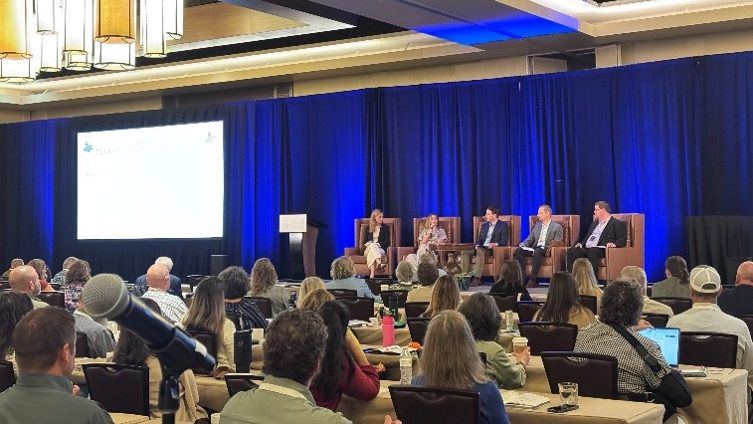
Texas Director Sharlene Leurig spoke on a panel discussing GCD curtailment of groundwater production, and how existing and future policies can support community trust. The panel focused on the need for clear, science-based rules to help regulated water users anticipate future reductions in permitted production with sufficient time to plan for those reductions. Sharlene helped shape the discussion on how GCDs can help stakeholders plan while maintaining their ability to adaptively manage the resources they regulate.
With a rapidly shifting water landscape driven by regulatory, environmental, and growth factors, it is more important than ever to leverage a suite of solutions to manage water. WestWater Research can help groundwater management entities and water users evaluate policy options, study socioeconomics impacts of water availability, and guide strategic planning, supporting water resiliency through an era of rapid change. As the Legislative Session approaches, we are also available to help clients track policy developments at the Capitol and at local groundwater districts. Please reach out to Sharlene Leurig, WestWater’s Texas Regional Director, to learn more.

Sharlene Leurig
Texas Regional Director