

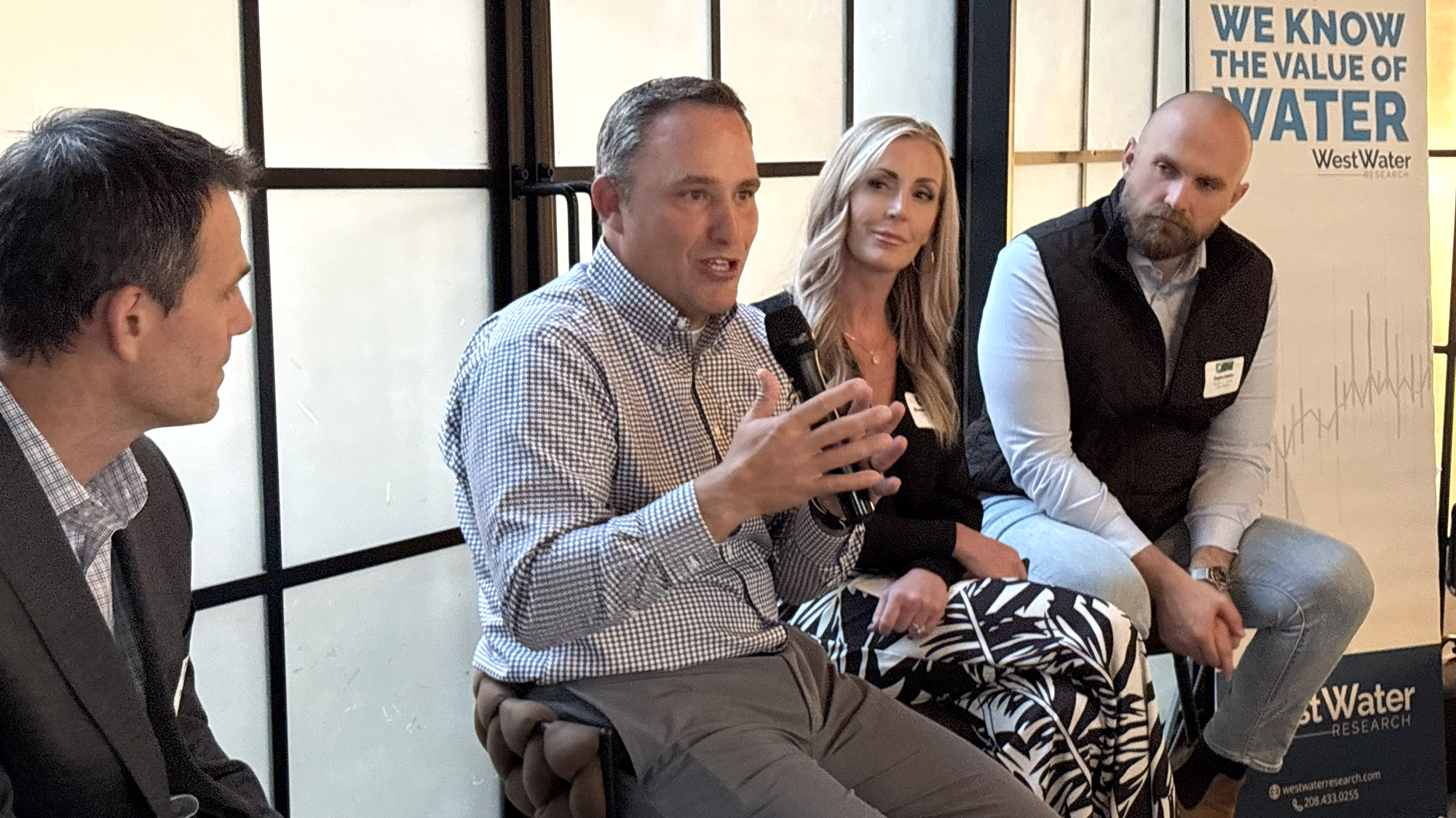
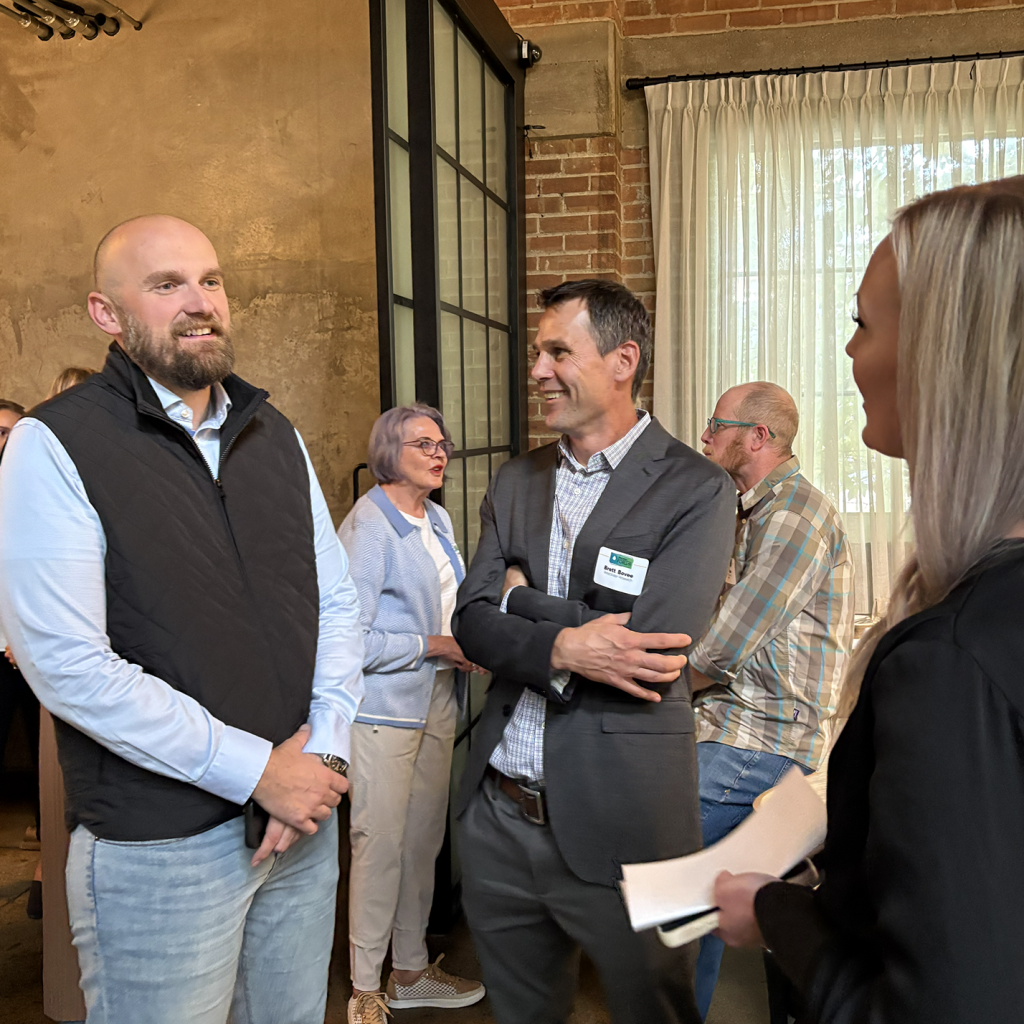
Last week, WestWater Research hosted a WestWater Forum at Salt & Olive in Salt Lake City. The evening brought real estate and water professionals together to discuss housing growth in a water-constrained region.
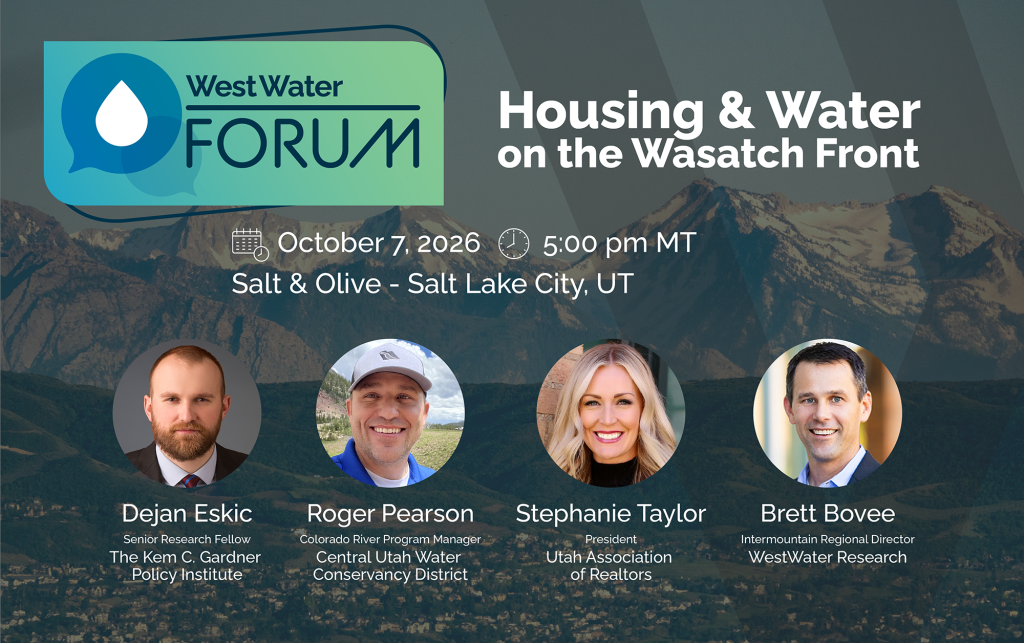
Brett Bovee, Intermountain Regional Director at WestWater Research, moderated a panel with Stephanie Taylor (Utah Association of Realtors), Dejan Eskic (Kem C. Gardner Policy Institute, University of Utah), and Roger Pearson (Central Utah Water Conservancy District). An engaged audience added builder, water manager, and scientific perspectives.
Growth Meets Affordability
Utah has not lost population since 1947, and development continues to push outward. Tight inventory, high interest rates, and rising costs have put homeownership out of reach for most prospective buyers. Water is one of the less visible drivers of that cost.
Water Is a Hidden Cost of Housing
New homes carry impact fees that panelists estimated at roughly $10,000 to $40,000 per home in Utah. That revenue funds infrastructure, not new water supply. Developers must also secure water separately, and many municipalities are already near the limits of their supply. Those costs ultimately pass through to buyers.
Conservation Starts at Construction
Outdoor watering is the biggest lever for conservation. Buyers are increasingly open to water-wise landscaping, and the cheapest time to install it is when a home is built. Retrofitting later is costly. Panelists also warned of demand hardening: once outdoor use is cut deeply, there is little left to cut during drought.
Planning Beyond City Limits
Regional coordination came up again and again. Shared infrastructure and cross-boundary planning stretch limited dollars and water further. Panelists also stressed public education, since most residents do not know where their water comes from. That conversation extended to the Great Salt Lake, where the group agreed that cutting customer use alone will not close the gap.
Key Takeaways
- Water and affordability are linked. Water infrastructure and supply costs flow directly to homebuyers.
- Build it right the first time. Water-wise landscaping at construction beats costly retrofits.
- Conservation needs a buffer. Deep cuts can leave providers exposed in drought.
- Think regionally. Cross-boundary planning is the path forward.
- Pricing and education matter. Rates rarely signal scarcity, and public awareness is low.



How WestWater Can Help
Water supply now shapes every development decision in the West. WestWater Research helps developers, municipalities, water districts, and investors understand what water costs, where to find it, and how to secure it. Our services include transaction advisory, valuation, and economic and market analysis backed by Waterlitix, the largest pricing database for western water transactions.
Thank you to our panelists and everyone who joined us. Contact our Intermountain team to discuss how water supply affects your next project.